Christmas Offer - Get 50% off your first Office Visit!

North Park Veterinary Hospital — From Nov 1st, we’re extending our working hours! Mon–Fri: 9 AM–8 PM | Sat & Sun: 9 AM–5 PM.   |   Emergencies are welcome.

Pet Health Library

Our Amazing Gallery

English + Dogs + Breed Characteristics

Amitriptyline
Amitriptyline is used off label and given by mouth to treat behavioral and pain disorders in dogs, cats, and occasionally birds. Common side effects include sedation, dry mouth, constipation, and urinary retention. This medication should not be used in pets sensitive to TCAs, seizures, or pets currently using MOIs or flea collars. If a negative reaction occurs, call your veterinary office.
Amitraz
Amitraz is a topical solution in the form of a medicated dip, spot-on treatment, or collar used to treat demodectic mange or for the prevention of flea and tick infestations. Common side effects include sedation, incoordination while walking, slow heart rate, gastrointestinal effects, skin irritation, and temporary high blood sugar. This medication is contraindicated in very young animals, and used with caution in old, debilitated, diabetic, or small-breeds. While animals may exhibit signs of sedation, contact your veterinary office if your pet cannot be aroused from sleep or if the sedation lasts for more than 72 hours. Amitraz is toxic if swallowed.

Aminocaproic Acid
Aminocaproic acid is a medication that blocks the breakdown of blood clots, and is used to treat postoperative bleeding, especially in sighthounds. It is given by mouth in the form of a tablet or liquid, or it can be given by injection by your veterinarian in the hospital. Side effects are uncommon but can include vomiting, diarrhea, or decreased appetite. Do not use this medication in pets that are currently experiencing clotting in the vessels, and use with caution in pets with heart, liver, or kidney disease. If a negative reaction occurs, call your veterinary office.
Hives (Urticaria) in Dogs
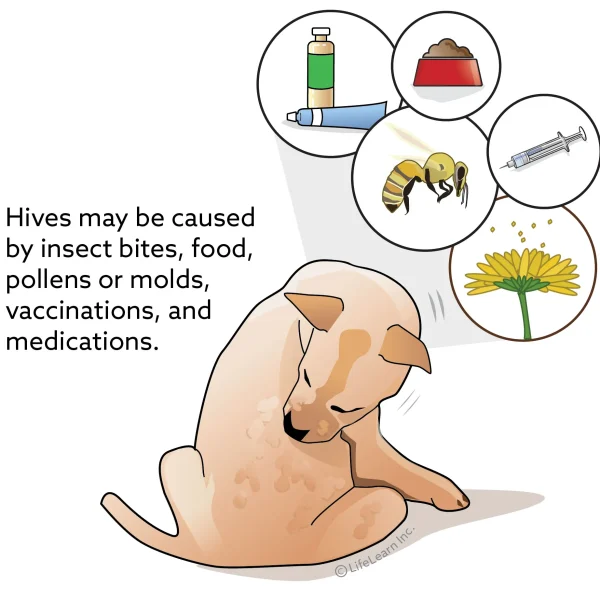
Urticaria, or hives, is a skin condition characterized by raised red skin welts caused by direct contact with a substance that causes an allergic reaction. These substances include insect bites, food, pollens, molds, vaccinations, and medications. If the swelling progresses to the throat, breathing can be compromised and result in a medical emergency called anaphylaxis. Injectable antihistamines and corticosteroids usually bring about a dramatic improvement, sometimes in as little as a few minutes.
Heat Stroke in Dogs
Heatstroke is another term for hyperthermia. Dogs suffering from heatstroke can have varied signs, from high respiratory rate to coma, depending on their temperature. Prognosis depends on the extent and duration of temperature elevation. Some dogs recover normally, but more severe cases will have permanent organ damage or may die from hyperthermia.

FILTER BY SPECIES

FILTER BY TOPIC

Book Now