Christmas Offer - Get 50% off your first Office Visit!

North Park Veterinary Hospital — From Nov 1st, we’re extending our working hours! Mon–Fri: 9 AM–8 PM | Sat & Sun: 9 AM–5 PM.   |   Emergencies are welcome.

Pet Health Library

Our Amazing Gallery

English + Dogs + Breed Characteristics

Liver Tumors
Primary liver tumors in dogs and cats are rare. There are 4 types: hepatocellular tumors, bile duct tumors, neuroendocrine tumors, and sarcomas. These cancers can be massive, nodular, or diffuse in form. In dogs, most liver tumors are malignant, while in cats, most are benign. The signs of liver tumors range from being asymptomatic to having inappetence, fever, lethargy, and weight loss; and less commonly, nausea, vomiting and diarrhea; increased drinking and urination; and jaundice. Occasionally there are neurological signs, such as seizures. With tumor rupture and intrabdominal bleeding there may be weakness, collapse, and difficulty breathing. The diagnosis is based on history, clinical signs, exam findings, diagnostic imaging, and FNA or liver biopsy. A biopsy is best for a definitive diagnosis. Surgery is the treatment of choice for most primary liver tumors followed by chemotherapy. Chemoembolization is a newer treatment.
Intestinal Tumors
Intestinal tumors are uncommon in dogs and cats, comprising about 2% of all cancers. There are many kinds, including leiomyosarcomas, lymphomas, adenocarcinomas, mast cell tumors, gastrointestinal stromal tumors (GISTs), plasmacytomas, carcinoids, and osteosarcomas (all malignant) and leiomyomas, adenomatous polyps, and adenomas (all benign). Most intestinal tumors are malignant. Intestinal tumors are more prevalent in older animals and certain breeds. Signs, diagnosis, and treatment are discussed.
Eyelid, Conjunctival, and Peri-ocular Tumors
Tumors can affect the eyelids, conjunctiva, and periocular tissues can be benign or malignant and can lead to secondary problems such as eye infections and corneal ulcerations. Diagnosis is best achieved through surgical excision of the tumor, but fine needle aspiration may be pursued as an initial diagnostic. Surgery is highly recommended to provide the pet with symptomatic relief, remove the tumor, and obtain a definitive diagnosis.
Eye Tumors - Primary Intraocular Tumors
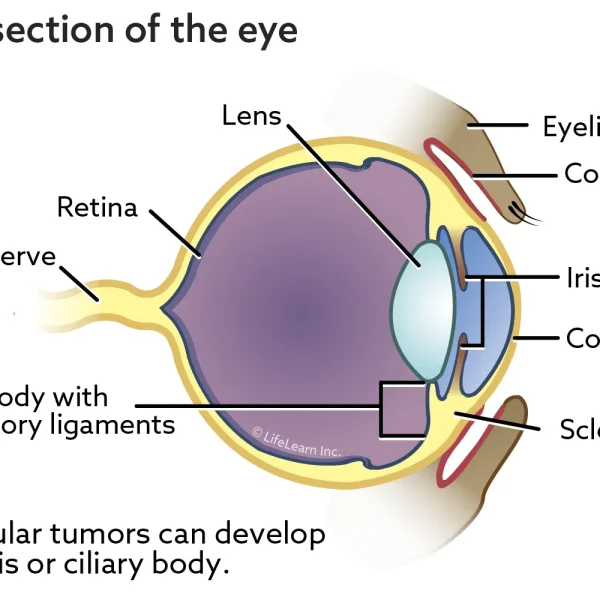
Primary intraocular tumors, aside from melanoma, are relatively uncommon. There are many different types of primary tumors, including ciliary body adenoma and adenocarcinomas, uveal schwannomas of blue-eyed dogs, feline post-traumatic ocular sarcomas, and iridociliary adenomas and adenocarcinomas. When an intraocular tumor is suspected, a referral to a veterinary ophthalmologist may be recommended. Diagnosis is usually via an abnormal ophthalmic examination and/or ophthalmic ultrasound. Surgery is often recommended, especially if the pet has symptoms that reduce quality of life. The risk of metastasis is related to the type of tumor.
Eye Tumors - Melanoma in Cats
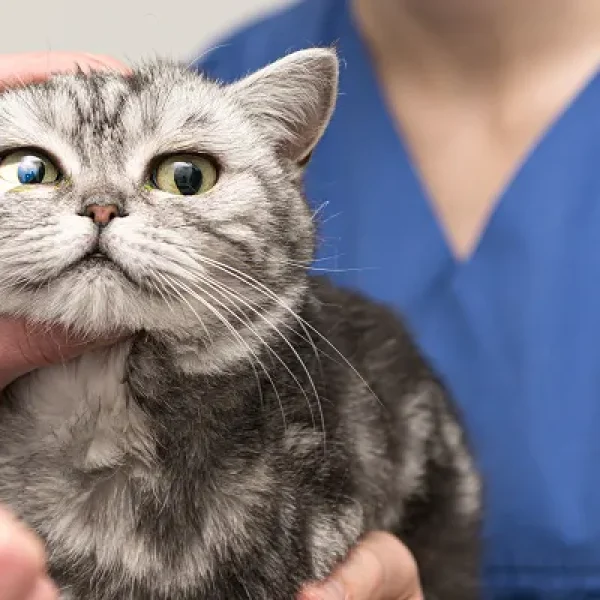
Eye melanomas in cats may be benign or malignant (cancerous). Malignant tumors, called diffuse iris melanomas, show up as multiple spots of color change in the iris, while benign tumors, called limbal melanomas, present as a distinct mass at the edge of the cornea. The diagnosis of these tumors is largely by clinical signs and tumor appearance. Treatment for diffuse iris melanomas may include close monitoring, laser surgery, removing part of the iris (iridectomy) and removing the eye (enucleation). Metastasis has been reported in about 19-70% of cases of diffuse iris melanoma, with most spread to the regional lymph nodes, kidneys, liver, and lungs. Treatment for limbal melanomas may include close monitoring, and surgery, sometimes combined with cryosurgery, laser surgery, or radiation therapy. Enucleation is an option if the treatment is unsuccessful, or the tumor regrows.

FILTER BY SPECIES

FILTER BY TOPIC

Book Now