
Christmas Offer - Get 50% off your first Office Visit!

North Park Veterinary Hospital — From Nov 1st, we’re extending our working hours! Mon–Fri: 9 AM–8 PM | Sat & Sun: 9 AM–5 PM.   |   Emergencies are welcome.

Pet Health Library

Our Amazing Gallery

English + Dogs + Breed Characteristics

Antibody Titers
Antibody titers are sometimes needed to diagnose disease. Antibody titers reflect the level of antibody that the pet has made in response to exposure to a certain infectious organism. The titer is determined by sequentially diluting the serum and testing it against the organism in question. The more dilute the serum when it stops producing a positive reaction, the higher the concentration of antibodies present in the blood. Titers give support to a diagnosis, allowing more targeted treatment and more specific prognostic information, as well as identifying zoonotic disease (diseases transmissible between animals and humans).
Preventive Healthcare Guidelines for Cats
The American Animal Hospital Association and American Veterinary Medical Association have established guidelines to standardize preventive health care for cats, helping them to live longer, healthier lives. This handout provides an overview of the recommendations within these guidelines and why they are so important.
Plaque and Tartar Prevention in Cats
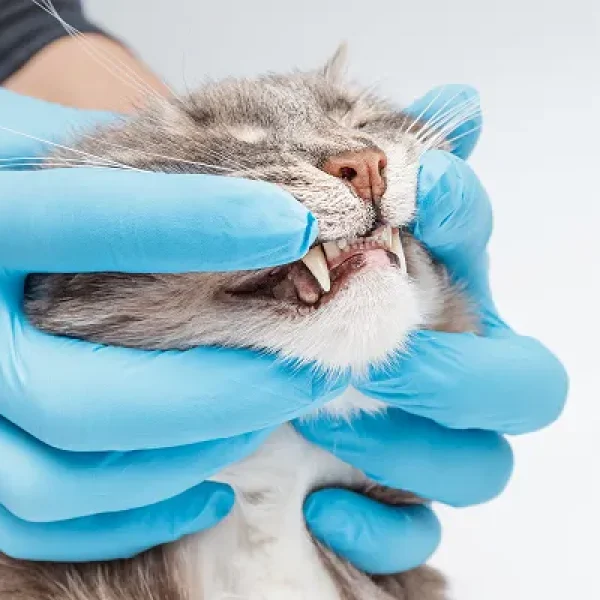
Plaque forms on teeth shortly after eating and within 24 hours begins to harden, eventually turning into tartar. Tartar serves as a place for bacteria to grow, leading to gingivitis. As gingivitis worsens, periodontal disease develops, which includes inflammation, pain, and tooth loss. Prevention of plaque and tartar build-up is key. Use VOHC-accepted food and/or water additives, wipe or brush your cat’s teeth daily, and have your veterinarian perform regular dental cleanings.
Persistent Deciduous Teeth (Baby Teeth) in Cats
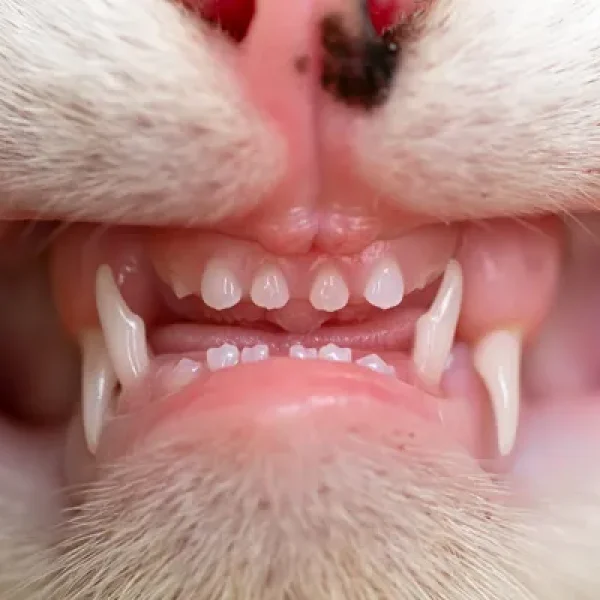
A persistent tooth is a deciduous (baby) tooth that is still present when the permanent tooth erupts. When this happens, the baby tooth occupies the place in the mouth that is meant for the permanent tooth, forcing the permanent tooth to erupt at an abnormal angle or in an abnormal position. The result is crowding or malposition of the tooth, causing an abnormal bite (malocclusion). Early extraction is advised.
Orthodontics (Moving Teeth) in Cats
Occasionally, cats’ teeth do not erupt in the right location, resulting in pain and poor function. Treatment options include orthodontic appliances to move the teeth, extraction, or crown amputation with restoration. Many veterinarians are comfortable delivering orthodontic care for cats. Your veterinarian may seek the advice of a board-certified veterinary dental specialist for advice or referral.

FILTER BY SPECIES

FILTER BY TOPIC

Book Now