Christmas Offer - Get 50% off your first Office Visit!

North Park Veterinary Hospital — From Nov 1st, we’re extending our working hours! Mon–Fri: 9 AM–8 PM | Sat & Sun: 9 AM–5 PM.   |   Emergencies are welcome.

Pet Health Library

Our Amazing Gallery

English + Dogs + Breed Characteristics

Echinococcosis in Cats
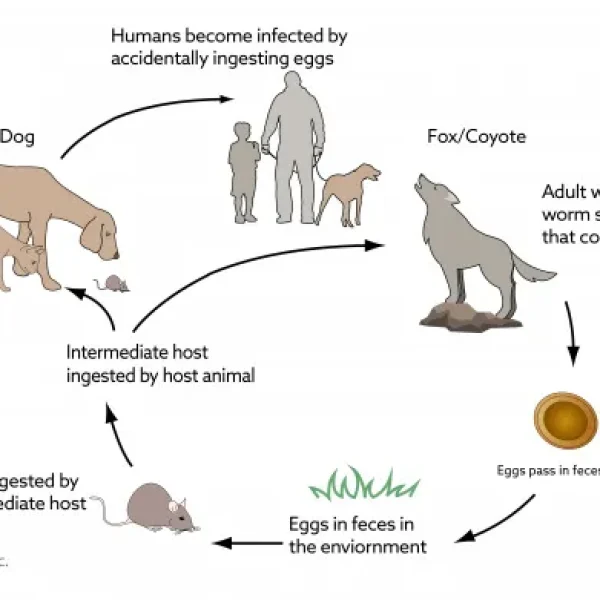
Echinococcosis refers to being infected with a tapeworm of the genus Echinococcus and is primarily a parasite of coyotes and foxes. Infected cats are usually asymptomatic, but in both cats and humans the parasite can cause large cysts to form within the lungs and liver. E.multilocularis is treated with praziquantel and in most cases the prognosis is good.
Diarrhea in Cats
Diarrhea is a symptom of an underlying problem that may be minor or very serious. Some cases may resolve on their own or with minimal treatment, while other cases require in-depth diagnostic testing and more aggressive treatment to address the underlying condition. The possible causes, diagnostic tests, and treatment protocols for diarrhea in cats are numerous and they are explained in this handout.
Cytauxzoonosis in Cats
Cytauxzoonosis is an often-fatal disease caused by a tick-borne protozoan parasite, typically found in bobcats. It is more commonly seen in the southern United States but is spreading with tick migration. It can cause anorexia, lethargy, respiratory difficulty, anemia, and jaundice. Diagnostic testing, treatment options, and preventives are described in this handout. This disease is not transmissible to dogs or humans.
Cuterebra or Warbles in Cats
Cuterebra is the scientific name for the North American rabbit or rodent botfly. Cats are accidental hosts of Cuterebra larvae, and they are rarely evident from external skin inspection. A hole enlarges when the warble has matured, often leading to an infected empty cyst. Treatment depends on when the condition is discovered, and in many cases, antibiotics are used to treat secondary infections.
Coccidiosis in Cats
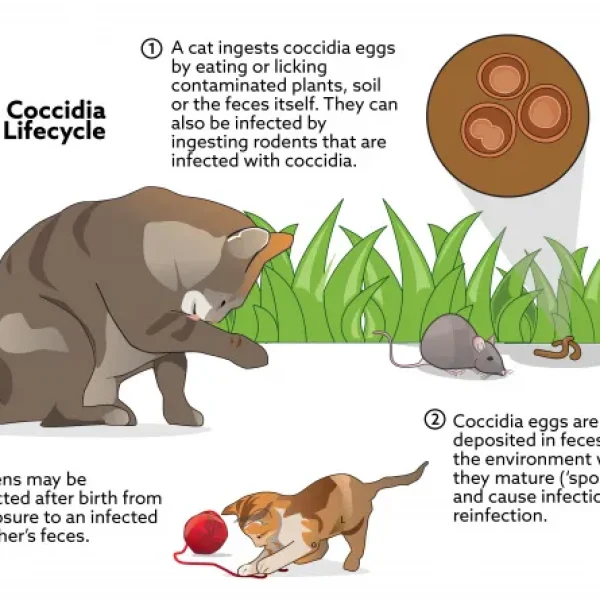
Coccidia are single-celled organisms that can act as a parasite after infecting your cat through the gastrointestinal tract. The most common form affecting cats, Isospora, is not a concern for infecting people, unlike Toxoplasma. They are highly resistant to environmental conditions, so cleanliness is important to prevent re-infection. Treatment is often simple with the appropriate antibiotics prescribed by your veterinarian.

FILTER BY SPECIES

FILTER BY TOPIC

Book Now