Christmas Offer - Get 50% off your first Office Visit!

North Park Veterinary Hospital — From Nov 1st, we’re extending our working hours! Mon–Fri: 9 AM–8 PM | Sat & Sun: 9 AM–5 PM.   |   Emergencies are welcome.

Pet Health Library

Our Amazing Gallery

English + Dogs + Breed Characteristics

Applying Eye Ointments to Cats
Applying eye ointments to your cat’s eye(s) can be a challenging or easy task. The proper administration of eye medications is essential for your cat’s prompt recovery. It is important to use the medication as directed for the full duration and contact your veterinarian if you have problems. The tips and instructions in this handout may make administering your cat’s eye ointment easier.
Applying Ear Drops to Cats
Topical ear medications are necessary for the treatment of most ear conditions in cats. This article provides step-by-step instructions on how to apply ear medications along with precautions. Tips are also given to reduce your cat’s anxiety with ear treatment.
Lung Fluke Infections in Cats
Lung flukes in North America are parasites called Paragonimus kellicotti that infect the lungs of cats after they have eaten an infected crayfish or rodents that have eaten infected crayfish. Eggs are then released by the parasite into the cat’s sputum to be coughed out or swallowed and released in the feces to continue the life cycle. Lung flukes can be found anywhere in North America but more commonly around the Mississippi River and Great Lakes. Infected cats can be symptom-free or may develop cough with sometimes bloody mucus, pneumonia, pneumothorax, lethargy and weakness. Diagnosis can include locating eggs of the parasite from feces or mucus from the lungs. X-rays can also reveal cysts in the lungs caused by the parasite. Treatment requires one of 2 commonly used anti-parasitic medications: Praziquantel or Fenbendazole. Although zoonotic, these parasites won’t transmit directly from cats to humans.
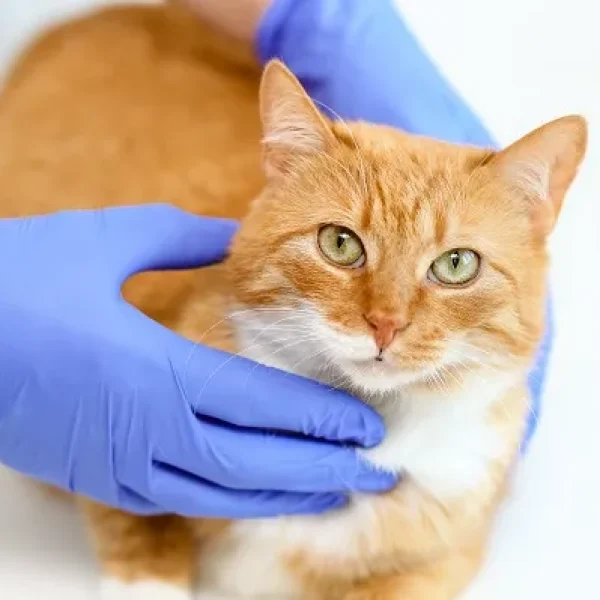
Heartworm Disease in Cats Treatment
Heartworms are blood-borne parasites that reside in the heart or adjacent large blood vessels of infected animals. There is no drug approved for treating heartworms in cats and surgical removal is generally the best option. Veterinarians now strongly recommend that all cats receive year-round monthly heartworm preventative in areas where mosquitoes are active all year round. Cats that live in colder areas, where mosquitoes are seasonal, should be given monthly preventives for at least six months of the year.
Heartworm Disease in Cats
Heartworms (Dirofilaria immitis) are blood-borne parasites that reside in the heart or nearby large blood vessels of infected animals. Recent studies of cats with heart and respiratory diseases have found an incidence of heartworms that is far greater than previously thought. Veterinarians now strongly recommend that all cats receive year-round monthly heartworm preventives. There are excellent heartworm preventives now available for cats, making prevention of heartworm disease safe and easy.

FILTER BY SPECIES

FILTER BY TOPIC

Book Now