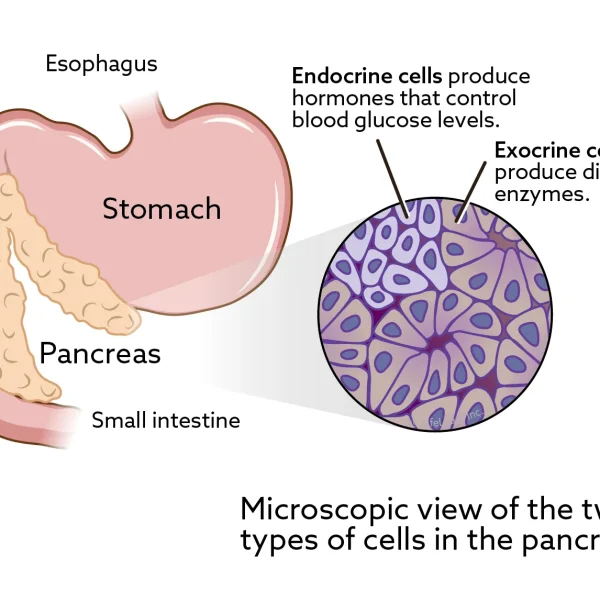
Primary pancreatic tumors are rare in dogs and cats. Exocrine tumors include adenomas and adenocarcinomas, and endocrine tumors include insulinomas, gastrinomas, and glucagonomas. Insulinomas are the most common type of pancreatic tumor, followed by adenocarcinomas. Both tumors are more common in dogs than cats. Large breed dogs and Siamese cats may be predisposed. Insulinomas are usually diagnosed with the finding of hypoglycemia with normal to high insulin on bloodwork and concomitant clinical signs. Adenocarcinomas typically go undetected until the clinical signs of metastasis are evident. For both tumors, diagnostic imaging and exploratory surgery with tumor removal (or biopsy) and histopathology are needed for a definitive diagnosis. Insulinomas can be treated with surgery and chemotherapy. Surgery is possible with adenocarcinomas, but as the cancer is more diffuse and has usually metastasized by the time of diagnosis, the prognosis is poorer. Chemotherapy and radiation therapy are ineffective in the treatment of adenocarcinomas. Given the high rate of metastasis with these tumors, staging is recommended prior to surgery.