Christmas Offer - Get 50% off your first Office Visit!

North Park Veterinary Hospital — From Nov 1st, we’re extending our working hours! Mon–Fri: 9 AM–8 PM | Sat & Sun: 9 AM–5 PM.   |   Emergencies are welcome.

Pet Health Library

Our Amazing Gallery

English + Dogs + Breed Characteristics

Gingival Hyperplasia
Gingival hyperplasia is the abnormal growth of excessive gum tissue. The gums may appear reddened or inflamed and may become so enlarged that it is difficult to visualize the teeth. In some cases, gingival hyperplasia may be localized to specific areas and its appearance may mimic the appearance of a mass or tumor. Gingival hyperplasia is most commonly treated with the surgical removal of the excessive proliferative tissue, referred to as gingivoplasty. Although it results in a significant improvement in clinical signs, gingivoplasty does not typically cure the condition.
Fractured Teeth in Dogs
Dogs often break their teeth from chewing on bones, antlers, and hard chew toys. There are five classifications of tooth fractures and each needs treatment to avoid tooth sensitivity and pain. Clinical signs include chewing on one side of the mouth, excessive drooling, dropping food while eating, pawing at the mouth, and facial swelling. Your veterinarian may perform a root canal or extract the tooth. Eliminating hard chew toys and treats can prevent tooth fractures.
Does My Dog Need a Root Canal
When a tooth is broken with the pulp exposed, there are only two choices for treatment: root canal therapy or extraction. Root canal therapy involves removing the pulp from the center of an injured tooth, sterilizing the canal, and replacing the removed pulp with dental materials; this prevents bacteria from penetrating the center of the tooth. Root canal therapy is less invasive than extraction but requires advanced training and specialized equipment.
Dentigerous Odontogenic Cysts in Dogs
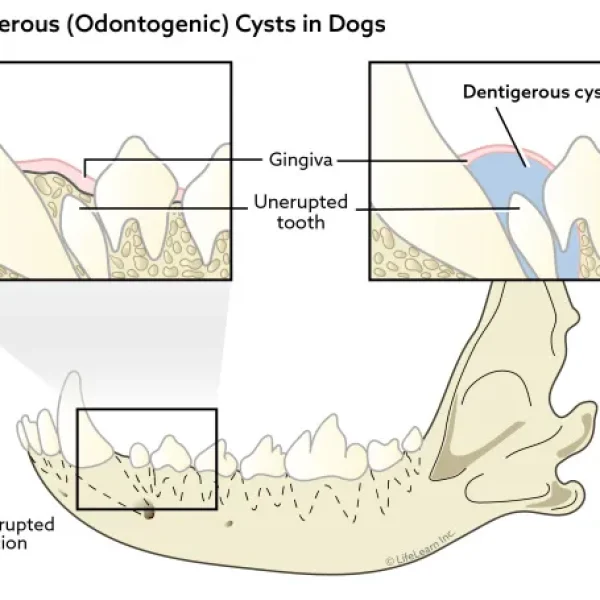
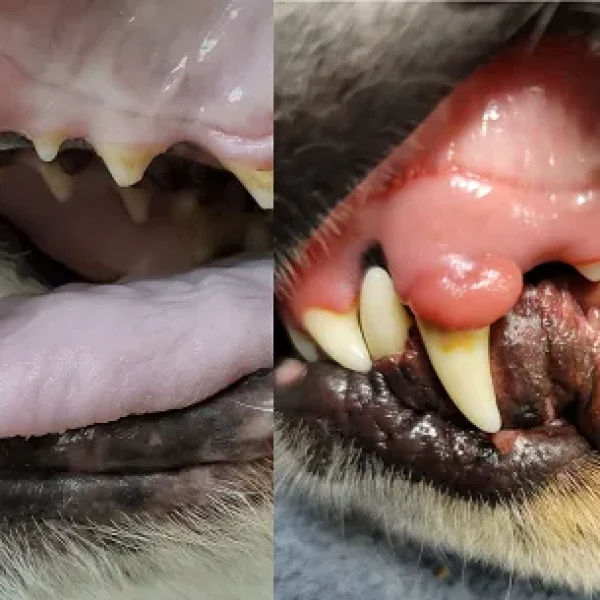
If a tooth is unerupted, it is at risk of forming a destructive dentigerous (odontogenic) cyst in the bone. Although unerupted or broken teeth can be painful, dogs rarely show obvious signs of pain. Dentigerous cysts, including and the original tooth must be removed carefully as to avoid compromising the bone, which can easily fracture during the extraction. Dentigerous cysts are preventable if unerupted teeth are addressed early in life.
Dental Pain in Dogs
Dental pain may take on a variety of appearances, but often, a dog will not show any outward signs of pain. The only effective treatment for dental pain is to address the dog’s underlying dental disease. The best way to prevent dental pain is to ensure that your dog receives regular dental care through a home dental care plan and regular veterinary dental care.

FILTER BY SPECIES

FILTER BY TOPIC

Book Now