
Christmas Offer - Get 50% off your first Office Visit!

North Park Veterinary Hospital — From Nov 1st, we’re extending our working hours! Mon–Fri: 9 AM–8 PM | Sat & Sun: 9 AM–5 PM.   |   Emergencies are welcome.

Pet Health Library

Our Amazing Gallery

English + Dogs + Breed Characteristics

Feeding Growing Puppies
The goal of feeding growing puppies is to lay the foundation for a healthy adulthood. Proper nutrition is critical to the health and development of puppies, regardless of breed, and it directly influences their immune system and body composition. An optimal growth rate in puppies is ideal; it is a slow and steady growth rate that allows the puppy to achieve an ideal adult body condition while avoiding excessive weight and obesity. Growing puppies need higher amounts of all nutrients in comparison to adult dogs, but excess energy calories and calcium can create serious problems. Together with your veterinarian and veterinary healthcare team, you can help your puppy grow into as healthy of an adult dog as possible.
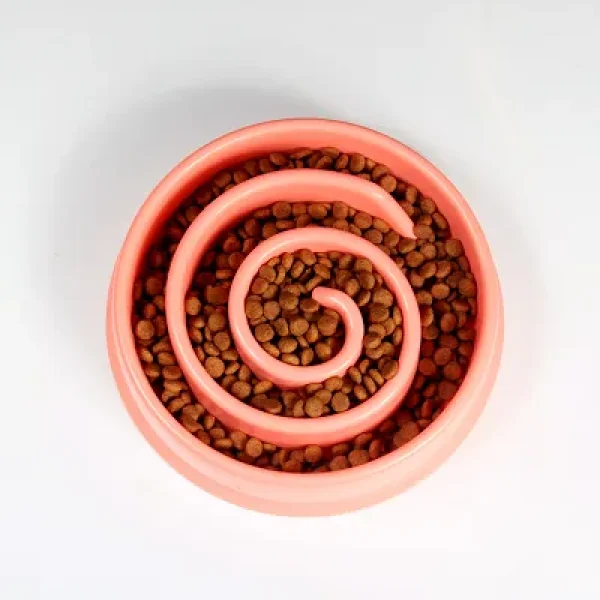
Feeding a Dog Who is a Glutton
Dog food has been made so palatable that it can easily create gluttonous behavior. Meal feeding and portion control are important to prevent obesity. Owners should not give in to begging behavior. Dogs that are still hungry after their meal can be supplemented with snacks such as green vegetables recommended by your veterinarian. Dogs that eat too quickly can be fed creatively to slow down eating.
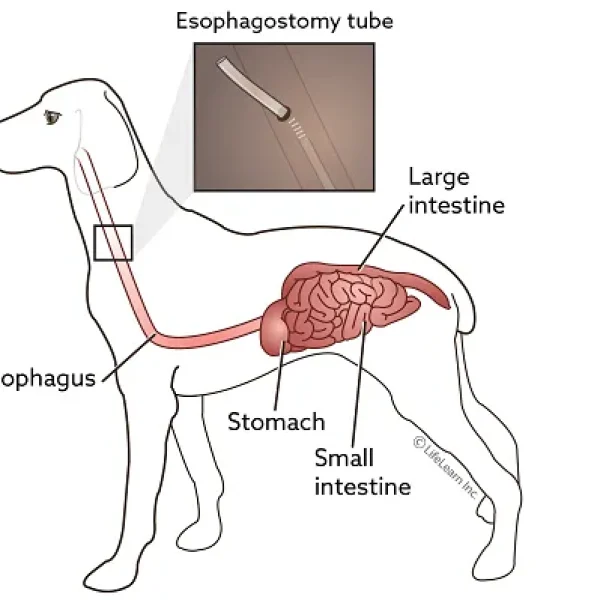
Esophagostomy Tube Feeding in Dogs
Esophagostomy tubes are placed through the skin of the neck into the esophagus to enable ongoing nutrition in dogs that either refuse to eat or are unable to chew and swallow food. A diet will be recommended by your veterinarian but must be liquefied with water before it can pass through the tube. Medications can also be administered through the tube. Step-by-step instructions are provided. The decision to remove the tube will be determined by your veterinarian.
Enriching Your Pet's Environment with Their Food
Many veterinarians, including nutritionists and behaviorists, believe it is important for dogs and cats to express their natural foraging and hunting behaviors. For pets living indoors, this can be difficult, and the lack of this stimulation can sometimes lead to behavior problems. Enriching a pet’s environment with food toys and puzzles at mealtimes can fulfill the need to forage. The use of toys, puzzles and other novel methods of food delivery can also be effective ways to increase daily movement in overweight or inactive pets.
Eclampsia in Dogs
Eclampsia in dogs is an emergent condition of hypocalcemia that generally occurs one to four weeks after whelping but can also occur shortly before giving birth. Risk factors include a poor diet, small breed dogs, abnormal parathyroid gland, and calcium supplementation during pregnancy. Signs of eclampsia start as restlessness, panting, and stiffness and can progress to disorientation, tremors, inability to walk, and convulsions. Treatment includes intravenous fluids, careful intravenous calcium supplementation, and other supportive medications. This is followed by oral supplementation and weaning puppies as soon as possible or supplementing their diet with milk replacer.

FILTER BY SPECIES

FILTER BY TOPIC

Book Now